This article is written for general informational purposes, reflecting search trends as of 2025–2026. Results may vary depending on your blog platform, niche, and publishing history. Continuous testing and data review are essential.

Why Chasing Search Volume Alone Fails
Almost every new blogger makes the same mistake: they find a keyword with tens of thousands of monthly searches, write a solid post around it — and get virtually zero traffic. The problem isn't the writing. It's that high search volume usually means brutal competition. A new blog with no domain authority trying to rank for "insurance," "diet," or "travel" is stepping into a fight it can't win from day one.
There's a subtler issue too: even when you do get visitors from a broad, high-volume keyword, conversion rates tend to be low. Someone searching "insurance" could want anything — a definition, a comparison, a claim form. But someone searching "best term life insurance for a 40-year-old non-smoker under $30/month" has a clear, immediate need. Same number of visitors on paper; completely different value in practice.
In 2026, the right starting point for any blog keyword strategy isn't volume — it's search intent. Before asking "what keyword should I use?", ask "what does the person typing this keyword actually want?"
4 Types of Search Intent (and How to Identify Them)
Both Google and Bing use search intent as a core ranking signal. Before you write anything, figure out which intent type your target keyword falls into — then build your content structure around that intent.
🔍
Informational
"what is…", "how to…", "why does…"
Seeking knowledge
🧭
Navigational
Looking for a specific
brand or website
⚖️
Commercial
"best…", "vs", "review"
Researching before buying
💳
Transactional
"buy…", "sign up", "price"
Highest conversion intent
Blogs typically perform best on informational and commercial keywords. Transactional keywords are usually dominated by product pages, ads, and e-commerce sites — hard terrain for an editorial blog. Find the intent type that fits your niche and double down there.
Long-Tail Keywords — Where 70% of Traffic Comes From
Over 70% of all web searches are long-tail queries — phrases of three or more words with specific meaning attached. They have lower individual search volumes, but the intent behind them is clear, competition is manageable, and conversion rates run 2–3x higher than broad head terms. For any blog that isn't already a high-authority domain, long-tail is where realistic wins live.
📌 Short-Tail vs Long-Tail — At a Glance
| Factor | Short-Tail (Head Term) | Long-Tail Keyword |
|---|---|---|
| Search Volume | High | Low to medium |
| Competition | Very high | Low |
| Conversion Rate | Low | 2–3× higher |
| Ranking (new blog) | Nearly impossible | Achievable |
Short-Tail vs Long-Tail: Real-World Examples by Niche
Look at how adding specificity transforms a vague keyword into one that signals a clear need — and practically writes your post structure for you.
| Niche | Short-Tail (High Competition) | Long-Tail Example (Rankable) | Intent |
|---|---|---|---|
| Finance | life insurance | best term life insurance for 40-year-old non-smoker under $30 a month | Commercial |
| Health | weight loss diet | 7-day meal plan for office workers trying to lose weight without cooking much | Informational |
| Travel | Japan travel | 4-day Tokyo itinerary for solo travelers without a JR Pass on a budget | Informational |
| Parenting | sleep training | why won't my 4-month-old nap and when should I start sleep training | Informational |
| Investing | ETF investing | best ETF portfolio for a beginner investing $500 a month in their 30s | Commercial |
| Tech / Apps | budgeting app | best free budgeting app that automatically syncs with your bank in 2026 | Commercial |
| Fitness | back pain | lower back pain from sitting all day at a desk — causes and stretches to fix it | Informational |
| Food | chicken recipes | easy high-protein chicken meal prep recipes for the week under 30 minutes | Informational |
🔬 Long-Tail Keyword Anatomy — "why won't my 4-month-old nap and when should I start sleep training"
Target
4-month-old baby
Problem
Won't nap
Intent
Cause + solution
Timing
When to start
→ The searcher is a new parent currently dealing with this problem, looking for both an explanation and a plan. Your post structure practically writes itself: why it happens → what to do about it → when to start sleep training.
A minimum of 30 monthly searches is a useful baseline — below that, ranking first still won't move the needle meaningfully. Start with keywords in the 30–1,000 range and expand from there as your authority grows.
Google vs Other Platforms — Strategy Differs
🔵 Google (and Bing) Strategy
Google evaluates content through the lens of E-E-A-T — Experience, Expertise, Authoritativeness, and Trustworthiness. It's a long game: meaningful organic traffic typically doesn't arrive until 6–12 months of consistent publishing. But once you've built topical authority, rankings tend to be stable and self-compounding. Think of your Google-indexed blog as real estate you own — slow to build, but appreciating over time.
🟠 Pinterest, Reddit, and Community Platforms
Platforms like Pinterest reward visually consistent, keyword-tagged posts and can drive traffic within days for certain niches (food, DIY, fashion, home). Reddit threads and community forums can generate sharp bursts of referral traffic but are harder to replicate systematically. For most bloggers, Google remains the primary long-term channel — use social platforms to accelerate early exposure while your Google authority builds.
5-Step Keyword Discovery Process
Step 1 — Define Your Seed Keywords
Write down 5–10 core words that describe your blog's topic — broad category terms like "yoga," "personal finance," or "parenting." These are your seeds. Everything else branches from here.
Step 2 — Mine Autocomplete and People Also Ask
Type each seed into Google and record every autocomplete suggestion. Then scroll to the "People Also Ask" box — those questions are real long-tail keywords in natural language form, handed to you for free. Do the same on YouTube if video fits your niche.
Step 3 — Filter by Volume and Competition
Use a free tool (see below) to check monthly search volume and keyword difficulty. Target 30–1,000 monthly searches with a difficulty score below 30 (on most tools' 0–100 scale). This is the zone where a new blog can realistically compete.
Step 4 — Confirm Intent by Checking SERP
Search the keyword and look at what's ranking. List posts? Comparison guides? Product pages? The format of results tells you exactly what structure your post needs to match user intent. If the top results are all "best X" lists, write a list. If they're how-to guides, write a guide.
Step 5 — Build Keyword Clusters (Topic Hubs)
Group related keywords into clusters and publish a series of posts that link to each other. For example, with "parenting" as your seed: "4-month sleep regression signs," "how to do the Ferber method," "when to drop the morning nap" — each post reinforces the others, and Google starts treating your blog as an authoritative source on infant sleep. This topic clustering approach is one of the most consistently effective SEO strategies in 2026.
Free Keyword Research Tools
Google Search Console (search.google.com/search-console)
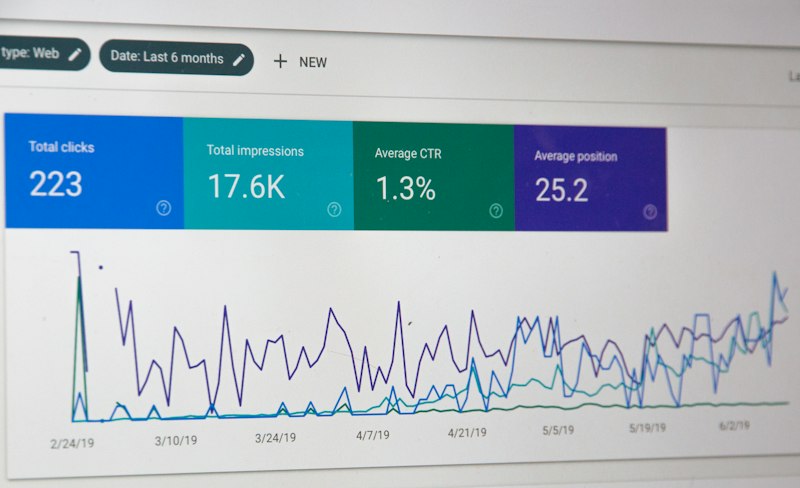
See exactly which queries are bringing people to your blog, your average position, and click-through rate. Essential for identifying posts that rank on page 2 and are ripe for optimization. Completely free.
Ubersuggest (neilpatel.com/ubersuggest)
Free tier gives you keyword volume, difficulty, and content ideas. Good for quick competition checks and finding long-tail variations you hadn't considered.
AnswerThePublic (answerthepublic.com)
Visualizes the questions, prepositions, and comparisons people use around any topic. Brilliant for finding long-tail, conversational keywords that map directly to FAQ-style blog posts.
Google Trends (trends.google.com)
Spot seasonal patterns and rising topics before they peak. If a keyword spikes every November, schedule your post for late October. Timing your content to trend momentum is an underrated traffic lever.
Keyword Strategy in the Age of AI Search
The biggest shift in 2025–2026 is the rise of AI-generated answers and zero-click search. Google's AI Overviews now summarize top results directly on the results page, meaning more users get their answer without ever clicking through to a blog. This is a real challenge — but not a reason to abandon SEO.
AI still builds its answers from web content. The principles of good SEO — structured information, topical focus, credible sourcing — still apply. What's changed is the goal. Instead of simply ranking on page one, the ambition now is to become the source AI cites. Posts that directly answer a specific question, use clear headings, and include FAQ sections are significantly more likely to be pulled into AI summaries.
There's also a silver lining: as search queries grow more complex and conversational (thanks partly to AI assistants training users to ask longer questions), long-tail keywords become even more valuable. A blog that consistently answers specific, nuanced questions is precisely what both human readers and AI search engines are looking for.
✅ AI Search Readiness Checklist
- Open with a direct, concise answer to the post's core question
- Use H2/H3 headings phrased as questions users would actually type
- Include an FAQ section (5+ real questions with clear answers)
- Link to credible, authoritative sources for key claims
- Keep your blog focused on one topic cluster (topical authority)
FAQ
How many keywords should I use per blog post?
Aim for 1–3 primary keywords and 5 or so supporting long-tail variations. What matters far more than keyword count is natural placement. A rough guideline: one primary keyword mention per 100 words, woven in naturally. Stuffing keywords where they don't belong signals low quality to both readers and search engines.
How long before I see results?
On Google, expect 3–6 months of consistent publishing before meaningful organic traffic kicks in — sometimes longer for competitive niches. Social platforms like Pinterest can move faster. Regardless of platform, don't judge your strategy in under 3 months. Consistency over that window is what separates blogs that take off from those that stall.
Keywords or content quality — which matters more?
Both are necessary, but the sequence matters. Great keywords with thin content produces high bounce rates, which tanks your rankings. Great content targeting keywords nobody searches means your work gets no audience. The right order is: find the keyword → understand the intent → write genuinely useful content around it.
Is it worth updating old posts with better keywords?
Absolutely — and often faster than writing new ones. In Google Search Console, find posts that have impressions but low click-through rates. Those are ranking but not compelling enough to click. Revising the title tag, opening paragraph, and adding related keywords frequently produces measurable results within 4–8 weeks.


